
CNC Machining for Industrial Equipment and Heavy-Duty Machinery
Durable and high-strength CNC components for heavy-duty industrial applications. Shenzhen XS Precision machines machine frames, support structures and functional mechanical parts for equipment builders and OEMs — from a single replacement part through repeat production.
Machined in carbon steel, alloy steel, stainless steel, cast iron and aluminium, with welding, heat treatment and surface protection coordinated under one order.
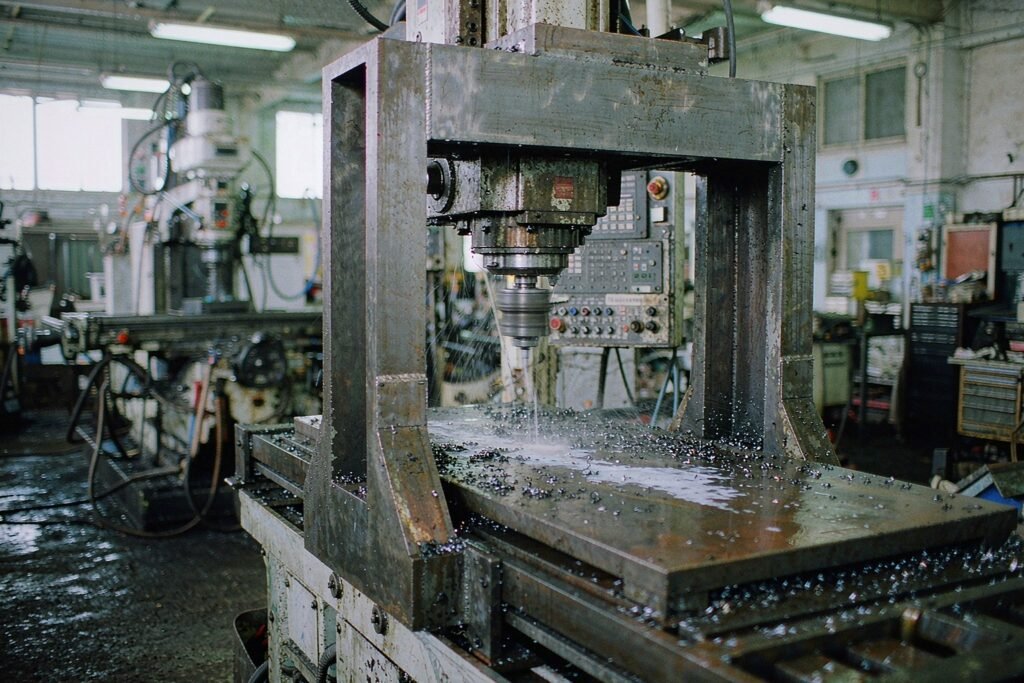
Four things decide whether an industrial component survives service
Industrial equipment buyers are rarely chasing the tightest tolerance on the drawing. They are chasing a part that still fits, still runs and still holds after years of load, vibration and dusty air.
Load, not just size
A frame or bracket carries a load case. Section, material condition and the machined interfaces decide service life far more than a nominal dimension does.
Scale beyond the standard table
Structural parts are frequently larger than what a standard machining centre will take, which is why setup planning and workholding matter as much as the cutting programme.
Welded, then machined
Weld distortion has to be dealt with before the finishing cuts. That means a heat treatment decision made at the planning stage, not discovered at final inspection.
It has to bolt straight on
Replacement components go into a machine that is already on site. Machined interfaces and hole patterns are what determine whether the part goes back into service or goes back to the supplier.
Machine frames, support structures and functional mechanical parts
Durable and high-strength CNC components for heavy-duty industrial applications. Typical parts XS Precision produces:
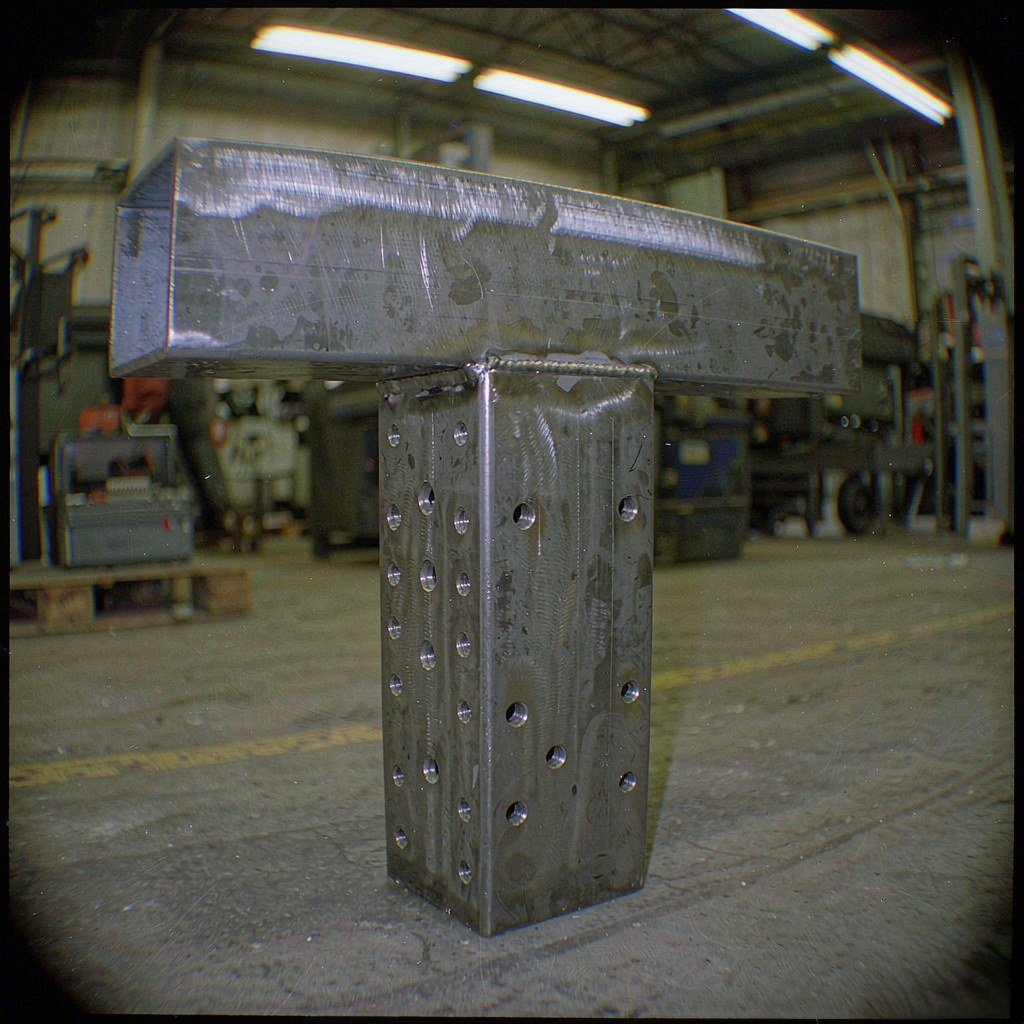
Machine frames
Base frames, machine beds and structural bodies, welded from heavy section and then machined so the mounting surfaces, pad heights and hole patterns line up on assembly. Distortion from welding is removed before the finishing cuts, not measured after them.

Support structures
Columns, gusseted brackets, cross members and base plates that carry the equipment above them. Machined faces control parallelism and levelling, which is what stops a support from turning into a vibration problem on site.
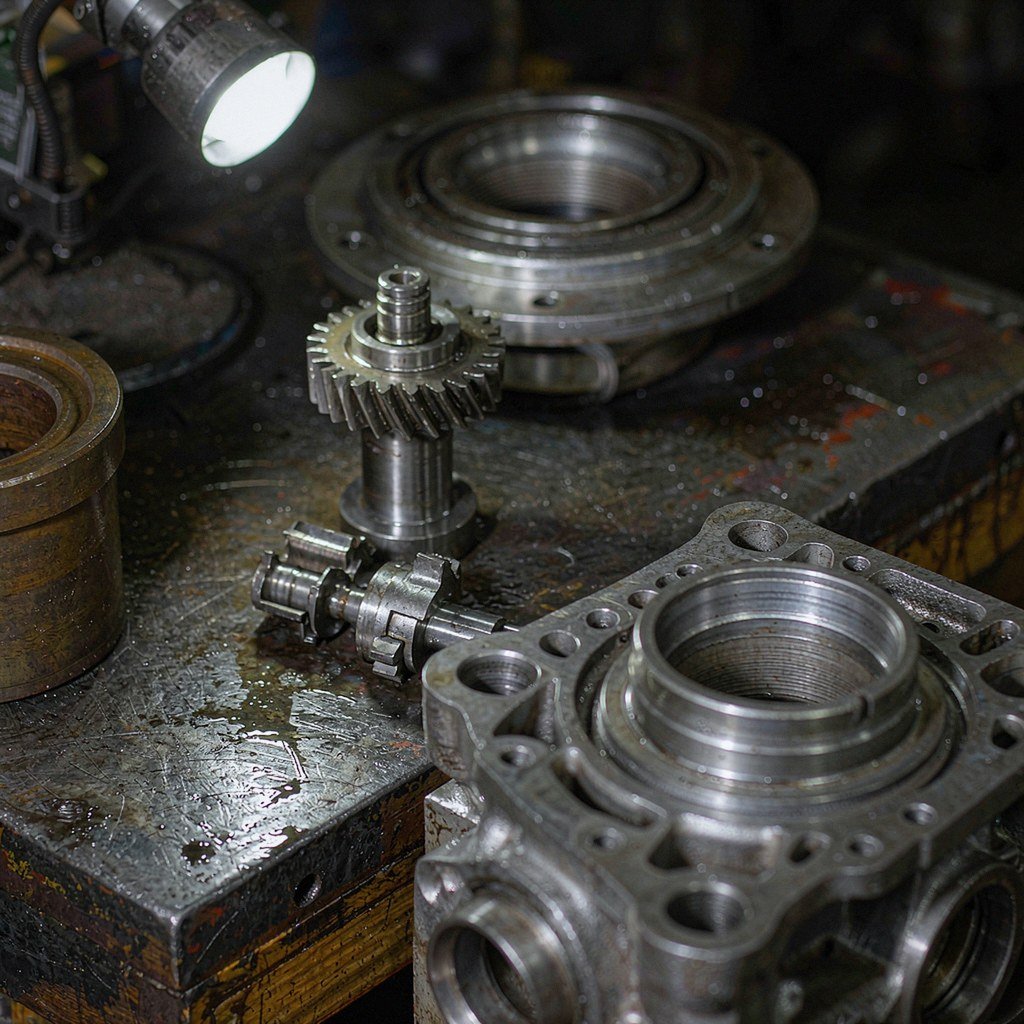
Functional mechanical parts
The moving parts of the machine: gears, shafts, flanges, couplings and hydraulic valve bodies, machined to the fits and surface condition the assembly needs.
Materials for structural and load-bearing components
Material choice on industrial work is usually driven by the load case and the environment. Full grades, properties and weldability notes are listed on the material expertise pages — steel, aluminium and stainless steel each have their own page.
| Material | Typical grades | Why it gets specified | Parts it usually becomes |
|---|---|---|---|
| Carbon steel | 45, Q345B, S355 | Weldable, strong and economical. The default where stiffness matters more than weight. | Frames, base plates, columns |
| Alloy steel | 42CrMo, 40Cr, 4140 | Hardened and tempered for fatigue strength under repeated load and shock. | Shafts, gears, tie rods |
| Stainless steel | 304, 316L, 17-4 PH | Corrosion resistance where the equipment is washed down or works outdoors. | Process equipment, wet-area parts |
| Cast iron | HT250, GG25 | Damping capacity and rigidity, which is why machine beds are still made from it. | Beds, housings, slide bases |
| Aluminium | 6061-T6, 6082, 7075 | Weight reduction on moving structures without losing machinability. | Gantries, panels, fixtures |
| Engineering plastics | POM, PA6, PEEK | Wear resistance and electrical insulation where lubrication is not practical. | Guides, wear pads, insulators |
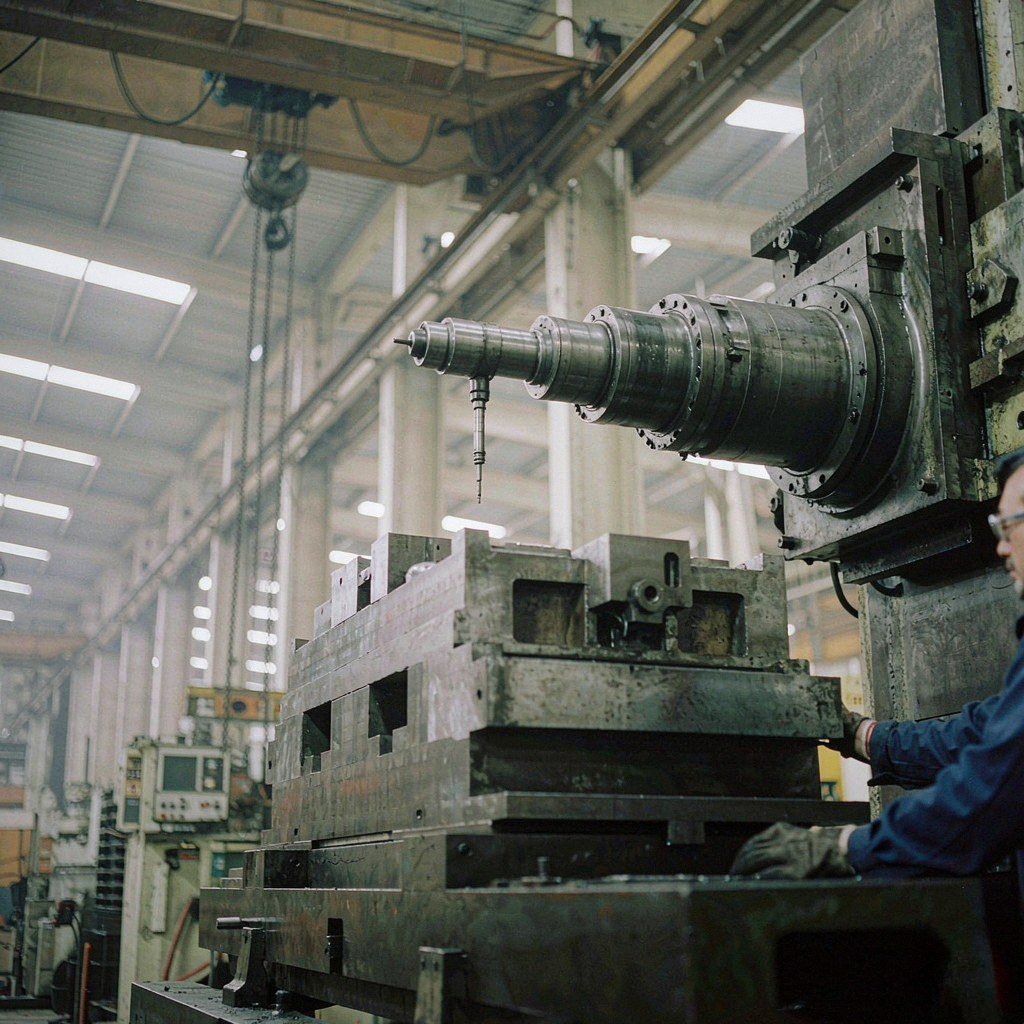
Machining capacity for oversized structural work
Structural components are quoted against the finished envelope, not against a catalogue. Send the largest overall size and the critical machined faces, and the setup plan is decided before the price is given — including how the part is held and lifted.
- Large-envelope milling and turning reviewed against your finished size
- Welded assemblies machined after stress relief, so faces stay true
- Machined datums established before hole patterns, keeping cumulative error out
- Lifting, workholding and transport planned with the machining sequence
How dimensional control runs through an industrial order
The same four checkpoints apply whether the order is one replacement frame or a repeat production batch.
Incoming material verification
Stock is checked against its certificate before it reaches a machine. Heat or batch numbers are recorded against the job, so a finished component can be traced back to the plate or bar it was cut from.
Setup and first-off approval
A first part is measured across the machined datums, fits and hole positions. The run does not continue on the assumption that the setup is correct.
In-process checks on critical features
Load-bearing bores, fits and mating faces are checked at set intervals through the batch, so a drift is caught while there is still time to correct it rather than at final inspection.
Final inspection and documentation
Components are measured before packing. The inspection record, material certificate and traceability documents ship with the order.
Finishing and surface protection for equipment in service
Industrial components usually need protection as much as accuracy. Finishing is arranged as part of the order rather than left to the customer to coordinate.
Machined condition
- Deburring and edge break
- Blasting and surface preparation
- Grinding and lapping of mating faces
- Laser marking and part identification
Corrosion protection
- Painting and industrial coating systems
- Zinc plating and hot-dip galvanizing
- Black oxide and phosphating
- Anodizing for aluminium components
Property and assembly
- Heat treatment and stress relief
- Hardening and surface hardening
- Bearing and bushing press-in
- Sub-assembly before shipment
Where XS Precision components end up in service
Machined frames, supports and mechanical parts go into equipment that runs continuously and is expensive to stop.
Production and process equipment
Machined frames and functional parts for production machinery, packaging lines and process equipment, where a stopped line is measured in output rather than in hours.
Material handling equipment
Support structures, gusseted brackets and base plates for conveyors, stackers and transfer equipment, where alignment and hole position decide how the assembly goes together.
Energy and heavy machinery
Load-bearing components for energy, mining and heavy machinery — shafts, couplings and structural frames specified for fatigue strength and field serviceability.
Questions industrial buyers ask XS Precision
The questions that come up most often when sourcing machined industrial components.
What does Shenzhen XS Precision manufacture for industrial equipment?
Shenzhen XS Precision is a CNC machining manufacturer based in Shenzhen, China. For industrial equipment programmes the company machines machine frames, support structures and functional mechanical parts — gears, shafts, flanges, couplings and hydraulic bodies — in carbon steel, alloy steel, stainless steel, cast iron, aluminium and engineering plastics. Work ranges from a single replacement component to repeat production batches, and components are shipped to equipment builders and OEMs worldwide.
Can you machine very large or heavy components?
Large and heavy sections are quoted against the finished envelope rather than a fixed size list. Send the overall size, the critical machined faces and the lifting points available, and the workholding and handling plan is confirmed before the price is given. If a part falls outside what can be machined in one setup, it is quoted with the sequence that keeps the critical faces true.
How do you keep welded frames dimensionally stable?
Welding moves metal, so the sequence is planned around it. Stress relief or a controlled cooling period is placed between welding and finish machining, and the machined datums are established after that. Finishing cuts are then taken on a part that has already finished moving, which is what keeps mounting surfaces and hole patterns consistent between the frame and what bolts onto it.
Which materials do you machine for industrial parts?
Carbon steel (45, Q345B, S355), alloy steel (42CrMo, 40Cr, 4140), stainless steel (304, 316L, 17-4 PH), cast iron (HT250, GG25), aluminium (6061-T6, 6082, 7075) and engineering plastics such as POM, PA6 and PEEK. If the drawing calls for a grade that needs a specific heat treatment condition, tell us at the enquiry stage so it can be planned into the route.
Do you handle single replacement parts as well as production runs?
Yes. A single replacement frame and a repeat production batch go through the same process route and the same inspection checkpoints, so a component proven as a one-off does not have to be re-qualified when the volume grows.
What documentation comes with an industrial order?
Material certificate, dimensional inspection report, first article report where required, certificate of conformance and batch traceability record. If your quality system uses a specific template, send it over and it is completed in your format.
Where is Shenzhen XS Precision located?
The company is based in Shenzhen, China, and supplies machined components to equipment manufacturers, engineering companies and OEM buyers worldwide. Enquiries are handled in English and drawings are reviewed for manufacturability before a quotation is issued.
Manufacturability questions are usually answered faster than a price. Send the drawing and ask.
Send the drawing and the load case
A STEP file and a drawing with tolerances marked is enough to start. You get a manufacturability review, price and lead time — and if something on the drawing will be difficult to hold, you hear about it before the order rather than after it. That matters most on equipment that cannot afford to stop.
Prototype, low-volume and repeat production · aluminium, steel, stainless steel, titanium and engineering plastics