
CNC Machining for Robotics and Automation
Durable and high-strength CNC components for heavy-duty industrial applications. Shenzhen XS Precision machines machine frames, support structures and functional mechanical parts for robotics builders and automation OEMs — one-off joint prototypes through repeat batches, on the same fixture and the same programme.
Lightweight aluminium structures paired with steel or stainless transmission parts, all machined and inspected in one Shenzhen plant — because robot accuracy is assembled from the tolerances of every single link in the chain.
Why robot tolerances run tighter than the rest of the machine shop
A robot is not a collection of parts. It is a chain, and every link multiplies whatever error the link before it carried. This is the single reason robotics drawings are usually three to five times tighter than comparable industrial machinery work.
A bearing seat in the first joint bored a hundredth of a millimetre off centre. Well inside what most general machinery would accept.
Every downstream link has length, and length turns angular error into linear error. The joint is not where the cost of that 0.01 mm gets paid.
What reaches the end effector, several links later. Past the repeatability most robot builders quote to their own customers.
Where robot parts go wrong, and how XS Precision answers
What typically goes wrong
- A joint bore that measures right before finishing and binds after.
- Thin-wall links that spring out of tolerance the moment they are unclamped.
- Hard anodising quietly shrinking a bearing bore below its fit.
- Prototype that assembled once, and a second batch that does not.
- Tolerances applied everywhere, so nothing critical can be afforded.
- Drawing revisions lost between engineering and purchasing.
What XS Precision does instead
- Finish sequence planned around the finish: bores sized for the anodising film before coating, not measured after it.
- Thin sections supported by dedicated fixtures and relieved between roughing and finishing, so the part does not move later.
- Film build treated as a dimension, not a decoration.
- Same fixture, same programme, same inspection plan from the first part to the hundredth, held under one revision number.
- Drawing review that asks which features carry motion, and lets cosmetic features stay loose.
- One contact point from quote to shipment, so revisions do not get re-typed along the way.
Machine frames, support structures and functional mechanical parts
Durable and high-strength CNC components for heavy-duty industrial applications. Typical parts XS Precision produces for robotics and automation customers:
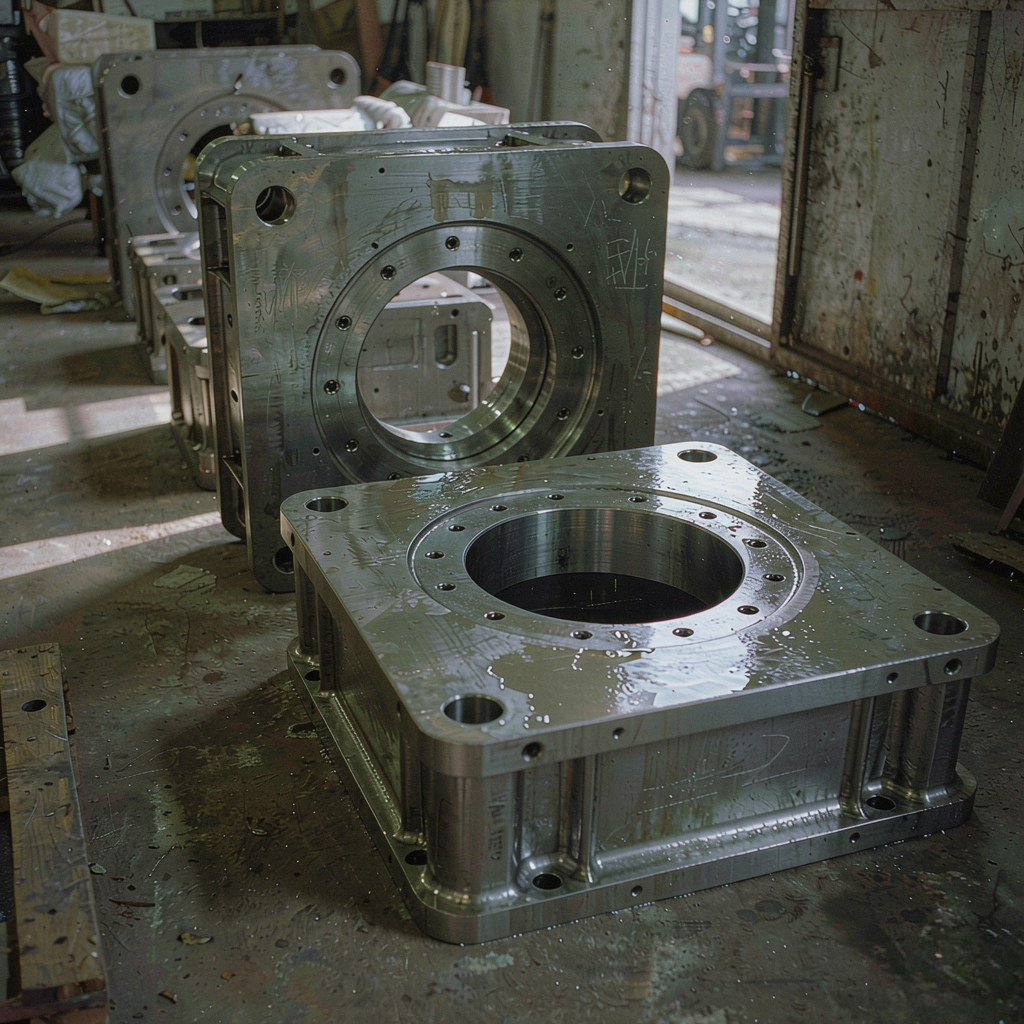
Machine frames
Robot base frames, pedestals, gantry beams and structural bodies. Milled mounting faces and drilled patterns decide where every downstream joint sits, so this is where the error chain either starts clean or starts wrong. XS Precision machines them after stress relief, not before.

Support structures
Column stack-ups, motor and encoder brackets, sensor mounting plates and levelling bases. Flatness and parallelism here are what keep a camera, a laser or reducer aligned once the machine has been running for months.

Functional mechanical parts
Reducer housings, output flanges, splined shafts, couplings and bearing carriers. The features that carry torque and define concentricity — and the ones that fail first if they are machined loose.
Taking weight out of a moving structure without giving stiffness away
Every gram on a moving link is a gram of payload the robot cannot carry, which is why 7075-T6 aluminium shows up on joint link drawings far more often than its price suggests. It is also why those parts are harder to machine than they look.
Thinner walls for the same load
Bores land in tolerance after coating, not before
Where the weight saving on a link actually comes from
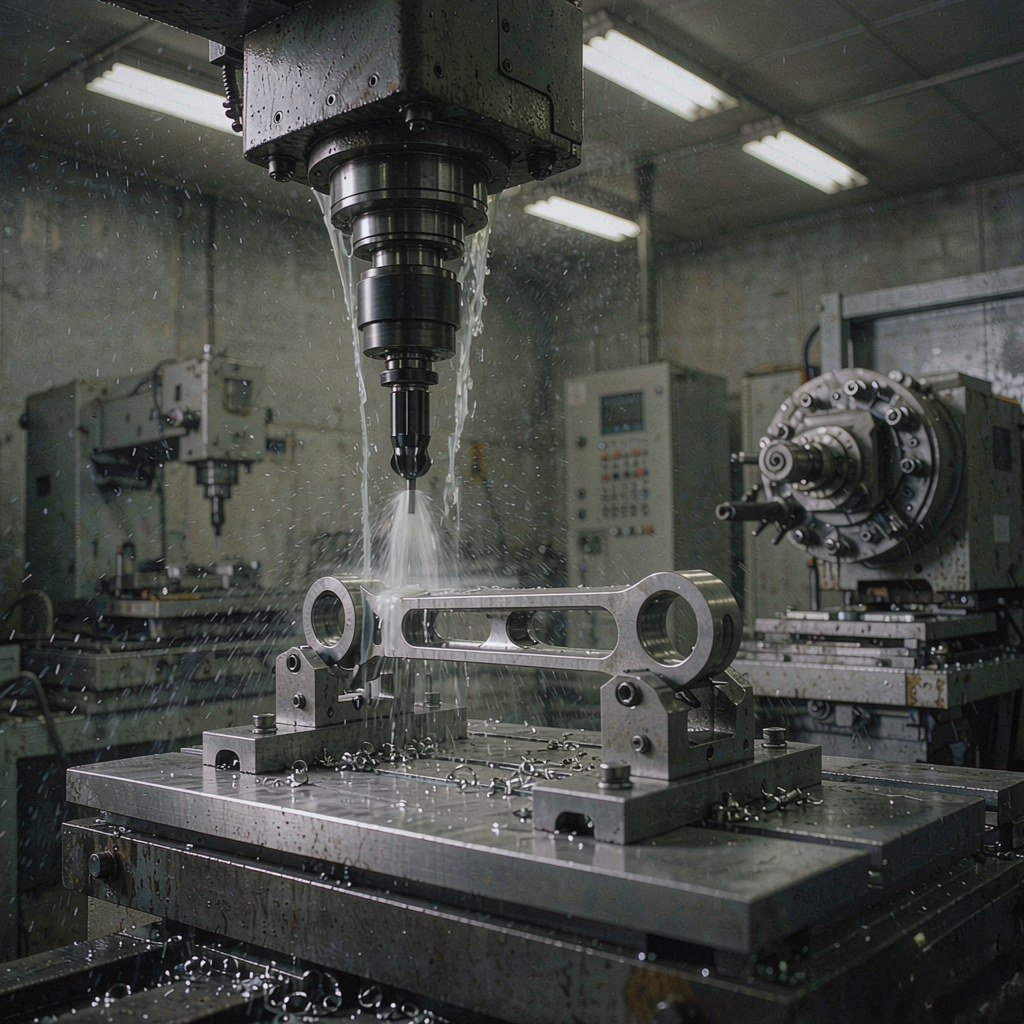
Three thin-wall machining problems
- Stress that moves after you finish. Rough, relieve, then finish — that order is what keeps a complex structural part inside tolerance a week later.
- Chatter on thin walls. Higher spindle speeds, sharp polished-flute tooling and support that follows the part, so thin sections do not ring.
- Coating that changes the size. Hard anodising grows into the bore. It has to be dimensioned in, not discovered after.
The numbers robotics drawings usually ask for
Published repeatability figures give the scale of it: roughly 0.02 mm for industrial arms, 0.05 mm for collaborative robots and 0.01 mm for surgical platforms. XS Precision sizes its processes around targets like these rather than around a general machine-shop default.
±0.005 mm
Held on bearing seats, encoder bores and other motion-critical features where the drawing calls for it.
Geometric control
Concentricity, perpendicularity and flatness on the features that set alignment — not just linear dimensions.
Ra 0.8 µm
As-machined finish typical for bearing and seal faces, where rough surfaces drive friction and trap debris.
Tolerance where it pays
Clearance holes and cosmetic faces are left loose. Spending the budget only where motion cares is what keeps cost sane.
Four stages from drawing review to inspection record
Drawing review
Which features carry motion, which carry load, and which are simply there. Anything that will fight the process gets raised before a cutter touches stock.
Fixture planning
One setup wherever the geometry allows it, so locating errors do not stack across operations. Fixtures are recorded against the part number.
In-process checks
Critical dimensions are verified during the cycle, so tool wear is corrected before it reaches a finished feature.
Measurement report
Dimensional records issued against the drawing revision, then packed so machined faces do not arrive with handling damage.
Cutting cost out of a robot part without cutting accuracy out of it
Most overspend on robot parts is not material or machine time. It is tolerance applied to features that do not need it, and geometry that forces a difficult setup. XS Precision runs the same review on automation and industrial equipment programmes.
On the drawing
- Tolerance only where motion or sealing depends on it.
- Larger internal corner radii, so a real cutter can cut it.
- Avoid pockets deeper than they are wide.
- Standard stock sizes where the envelope allows.
- Merge two bolted parts into one machined part when the assembly allows it.
Questions robotics buyers ask XS Precision
Can XS Precision machine the prototype and the repeat batch?
Yes. Robot parts move fastest when the same fixture, programme and inspection plan carry through from the first article to production quantities. XS Precision holds those against your part revision so a repeat order behaves the same way the validated prototype did.
What tolerance can you hold on a bearing bore?
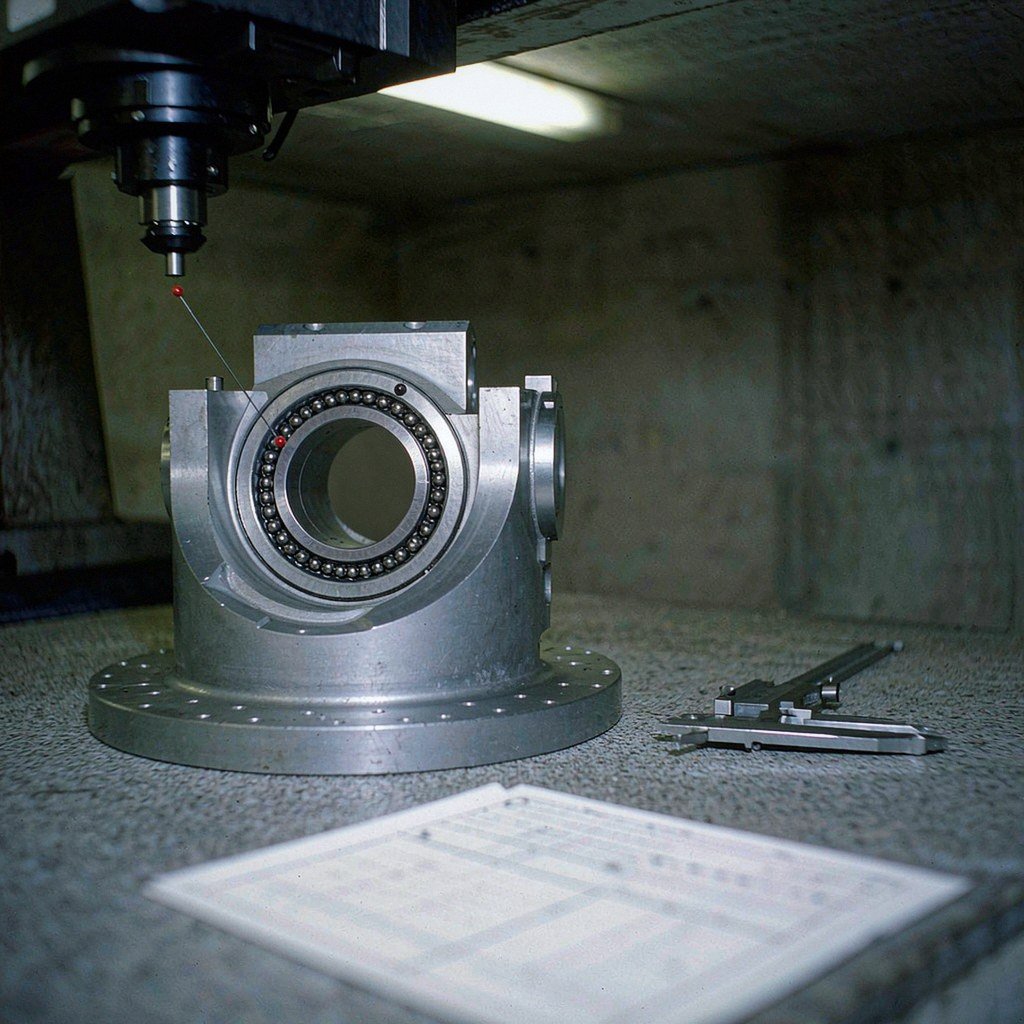
Where the drawing requires it, motion-critical features such as bearing seats and encoder bores are held to ±0.005 mm, with geometric tolerances controlled alongside them. Tell us which features are critical — we would rather spend the tolerance budget where your kinematics need it than apply it everywhere.
Does hard anodising change dimensions?
It does. The coating grows into a bore, typically 0.01–0.03 mm depending on specification. XS Precision allows for that build-up during machining so the finished part measures correctly after coating rather than only before it.
How do you handle thin-wall aluminium links?
Thin sections are roughed, stress-relieved and then finished with support fixturing, so the part does not spring once it is released. Spindle speed, tool geometry and clamping are chosen to avoid chatter rather than simply slowing the cut down.
What do you need in order to quote?
A STEP or IGES file, a 2D drawing with tolerances and materials marked, quantity including anticipated repeat volumes, surface finish and any inspection requirements. Telling us which surfaces matter for motion or alignment helps more than anything else on the drawing.
Can you work with our existing drawing and revision system?
Yes. Send the drawing as it stands. If something is difficult or expensive to hold, XS Precision will raise it with the reason attached, so your engineering team can decide rather than receive a silent substitution.
Do you machine parts for robot builders outside Shenzhen?
XS Precision is based in Shenzhen and ships machined components to automation customers internationally, with packing specified so machined faces and threads arrive undamaged.
Send XS Precision the drawing and see what the chain can carry
A STEP file and a drawing with tolerance callouts is enough. You get a manufacturability review, a price and a lead time — and where a feature is going to be expensive to hold, you hear it before the first part is cut.