ALUMINUM ALLOYS · MATERIAL EXPERTISE

CNC machined Aluminum Alloys in 6061, 6082 and 7075

Aluminum is the only material on this site where the lightweight is not the interesting part. The interesting part is that the three grades most drawings call out — 6061, 6082 and 7075 — have almost identical stiffness, and differ mainly in what they cost you in welding, anodizing and distortion. XS Precision machines all three into Automation components, Structural parts and Electronic housings, and tells you when the grade on the drawing is the wrong one.

Every part below was quoted against the alloy, the temper and the finish together, because those three decide the price together.
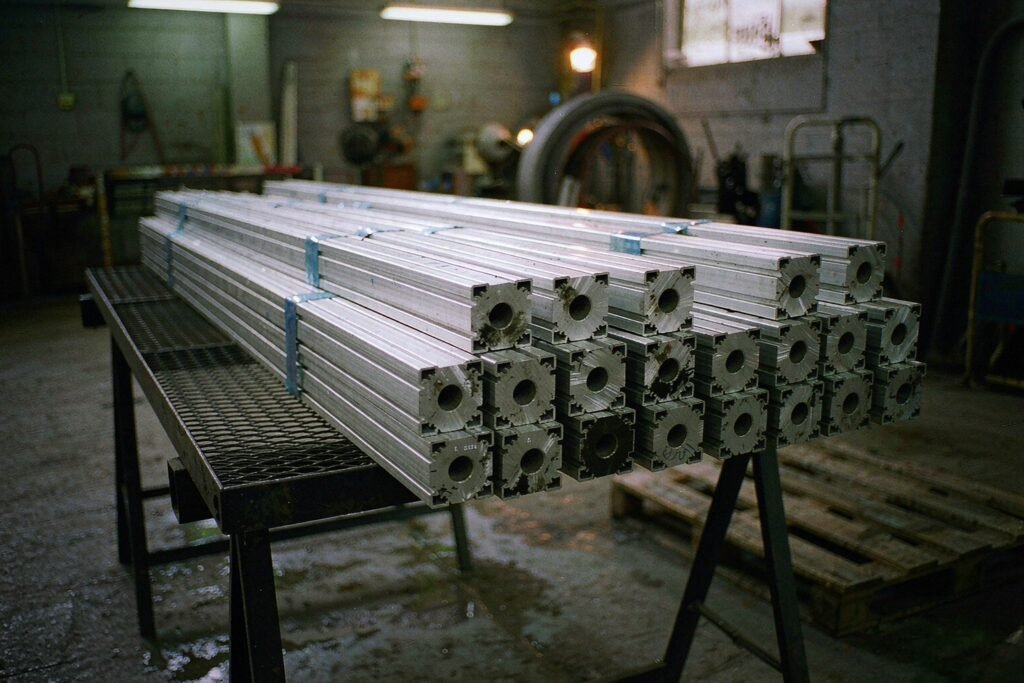
Aluminium T-slot extrusion profiles stacked on a workshop trestle, square 40 mm section with a T-shaped slot down each face and a round central bore, saw-cut ends showing the full cross-section under blue protective film
THE SIX NUMBERS THAT DECIDE THE ALLOY

Stiffness is the same in all three. Everything else is not.

Elastic modulus for 6061, 6082 and 7075 sits between 69 and 71.7 GPa — inside the scatter of the test method. If your part is deflection-limited rather than strength-limited, paying three times the bar price for 7075 buys you nothing but a lighter wallet. These six numbers are the ones that actually move a design.

69–72
GPa · E, ALL THREE
Rigidity is geometry, not grade. This is the single most expensive misunderstanding in aluminum sourcing.
570
MPa · Rm, 7075-T6
Nearly double 6061-T6 at one third the weight of steel. Also the temper most likely to crack in service.
−13%
STRENGTH COST OF T73
What you pay to move 7075 out of stress-corrosion cracking range. Almost always worth it outdoors.
167
W/m·K · 6061-T6
Against 130 for 7075 and about 200 for 6063. Putting 7075 on a heat sink loses a third of the cooling.
50%
HAZ STRENGTH AFTER WELDING
Welding 6061 or 6082 in T6 drops the heat-affected zone to roughly T4. Design the joint for that, not for the parent metal.
+29%
LME, YEAR TO AUG 2026
From roughly $2,545 to $3,280 per tonne. China’s 45 Mt capacity cap is full and no longer absorbs demand growth.
THE THREE GRADES ON THE DRAWING

6061, 6082 and 7075 are not three grades of the same aluminum

Aluminum Alloys sort into families before they sort into grades. Two of these three sit in the same family and differ by one element. The third is a different metallurgy entirely — a zinc-bearing alloy that behaves more like a mild steel in the machine and much worse in a weld. Reading the table below in the wrong order is how specifications go wrong before anyone cuts metal.
6061UNS A96061 · EN AW-6061 · AlMg1SiCu
The copper-bearing one, and the default answer
Magnesium and silicon do the strengthening, copper adds a little more and makes it cut cleanly. It welds better than any other high-strength grade, anodizes with consistent color, and is stocked everywhere in plate, bar and extrusion. Roughly 80% of the aluminum parts we quote come out as 6061 with no argument.
Rm, T6310 MPa
Re, T6276 MPa
Elongation12%
Hardness95 HB
Thermal k167 W/m·K
Density2.70 g/cm³
6082UNS A96082 · EN AW-6082 · AlSi1MgMn
The manganese one, and the European structural standard
Up to 1.0% manganese against 6061’s 0.15 or less. Manganese refines the grain and forms dispersoids that resist recrystallization, which is why 6082 holds 8–12% more strength in thick section and resists pitting better in coastal air. Eurocode 9 projects specify it almost by reflex.
Rm, T6340 MPa
Re, T6310 MPa
Elongation10%
Hardness~98 HB
Thermal k170 W/m·K
Density2.70 g/cm³
7075UNS A97075 · EN AW-7075 · AlZn5.5MgCu
The zinc one, and the grade people over-specify
Zinc, magnesium and copper together give it nearly double the strength of 6061-T6 at one third the mass of steel. It also machines beautifully into short, well-broken chips. Then it cannot be fusion welded, it distorts when you remove metal from one side, and it will crack in chloride under sustained load.
Rm, T6570 MPa
Re, T6503 MPa
Elongation11%
Hardness150 HB
Thermal k130 W/m·K
Density2.81 g/cm³
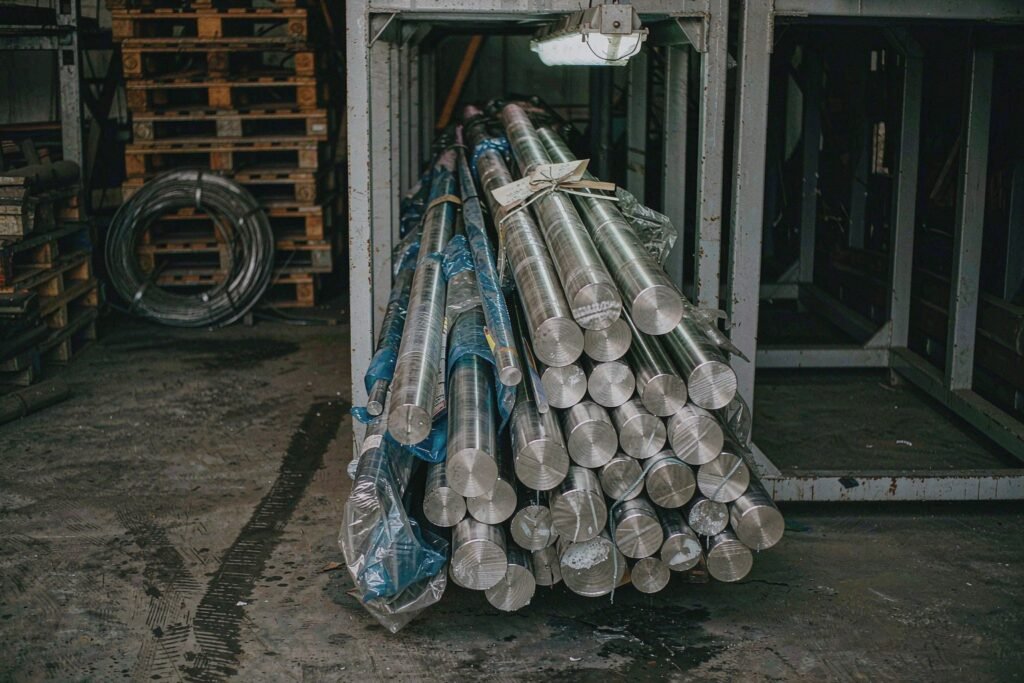
Aluminium round bar stock leaning in a steel storage rack, cut ends facing the camera with concentric turning marks and chamfered edges, several bars still in blue plastic sleeve with a mill tag wired on

Stock form decides what you can actually buy. 6061 is stocked almost everywhere in plate, round bar, hex, tube and a long catalogue of extrusion profiles, which is why it wins on lead time without anyone deciding it should. 6082 is thinner on the ground outside Europe — plate and extruded bar are easy to find, thin sheet and small-diameter round are not. 7075 plate is routinely available in T6 and T651, while T7351 and T73 round bar are a mill-order item in most markets. Establish which forms the grade actually comes in before the drawing calls for it.

READ TWO ROWS OF THE SPEC AND YOU UNDERSTAND THE FAMILY

6082 is the manganese alloy. 6061 is the copper alloy.

Every downstream difference between the two — strength, anodizing color, corrosion behavior, price — traces back to those two lines of the chemistry table. ASTM B221 allows 6061 up to 0.40% copper and no more than 0.15% manganese. EN 573-3 allows 6082 up to 1.00% manganese and no more than 0.10% copper. That is the whole story.

the reason for the strength
6061
Cu 0.15–0.40%
Copper adds precipitation strengthening and improves machinability, so 6061 cuts faster and finishes brighter than 6082 in the same operation. The cost is corrosion: copper-rich phases are cathodic to the surrounding aluminum matrix, so any galvanic couple that starts has more driving force behind it. This is why 6061 is the grade that shows tea-staining first on a coastal installation, and why it is not the alloy to pick for permanent immersion.
the reason for the durability
6082
Mn 0.40–1.00%
Manganese does a different job. It refines the cast grain structure and forms fine dispersoid particles that pin the grain boundaries, which raises strength in thick sections and resists recrystallization during extrusion. A more stable grain boundary resists intergranular attack, so 6082 is measurably better in marine and industrial atmospheres. The cost is cosmetic: higher silicon makes the anodized surface read very slightly greyer than 6061.

Neither of them is a marine alloy. Both 6061 and 6082 are routinely described as corrosion resistant, and in atmospheric and fresh-water service they are. But for continuous seawater immersion or salt spray, the grade that belongs on the drawing is 5083 or 5251 from the 5xxx family, which cannot be heat treated and so cannot lose that strength in a weld. When a customer asks us for “6061 for a boat part”, we say so before quoting.

HIGH STRENGTH-TO-WEIGHT RATIO HAS A CONDITION ATTACHED

7075 gives you 570 MPa. Which temper gives it is the real question.

Alloy and temper are not the same material specification. 7075-T6 and 7075-T73 share a chemistry number and almost nothing else that matters. Moving from T6 to T73 costs roughly 12–15% of tensile strength and buys about an order of magnitude of stress-corrosion resistance, plus fracture toughness that rises from around 20–24 to 28–33 MPa·√m. On a part that sees sustained load in humid or coastal air, that is not a compromise — it is the only correct answer.

T6
as quenched, peak aged
572 MPa
Re 503 MPa
HIGH RISK SCC
T651
T6 + 1.5–3% stretch
570 MPa
Re 500 MPa
MEDIUM SCC
T76
moderate overage
540 MPa
Re 470 MPa
LOW SCC
T73
full overage
505 MPa
Re 435 MPa
VERY LOW SCC
T7351
T73 + stretch
503 MPa
Re 433 MPa
VERY LOW SCC
symptom
A large flat bracket in 7075-T6, fully machined from one side, comes off the machine bowed.
what we change
Buy T651, not T6. The “51” is a controlled 1.5–3% stretch applied after quenching and before ageing, which releases most of the residual stress the quench locked in. It costs 5–10% more and eliminates the single most common aluminum rework we see. If only T6 is available, rough both sides, leave stock, let the part rest, then finish.
symptom
A coastal installation in 7075-T6 cracked along a grain boundary after eighteen months with no visible warning.
what we change
Specify T73 or T7351 in chloride or high humidity. Stress corrosion cracking is a function of three things at once — sustained tensile stress, a susceptible temper, and the environment — and removing any one of them stops it. Tempering down is usually cheaper than redesigning the load path.
symptom
Someone set up a welded 7075 frame and it cracked in the weld on the first thermal cycle.
what we change
7075 does not fusion weld. Arc processes hot-crack it, soften the weld zone by 40–50%, and leave a residual SCC risk that no inspection catches. For welded frames drop to 6061 or 6082 and design for the T4-level heat-affected zone; use friction stir welding, fasteners or structural adhesive if 7075 strength is genuinely required.
GOOD MACHINABILITY, MEASURED RATHER THAN CLAIMED

Aluminum machines 5 to 10 times faster than steel. That is exactly why the mistakes are expensive.

Good machinability is the property buyers quote first and define least. Because it cuts so easily, aluminum forgives a bad program right up to the point where it does not. Two failures account for nearly every scrap part in our aluminum cell: heat welded into a thin wall that moves after unclamping, and a built-up edge from a dull or wrongly coated tool that drags the surface instead of shearing it.

6061-T6
Short broken chips, low tool wear, finishes to Ra 0.8 µm without special effort.
Excellent
6082-T6
Similar to 6061 but slightly more spindle load; grain structure favors a polished edge.
Very good
7075-T6
Beautiful chips, higher cutting force, shorter tool life from the zinc and copper abrasion.
Very good, different
5052-H32
Gummy and long-chipping. Included here only because people try to machine it.
Poor
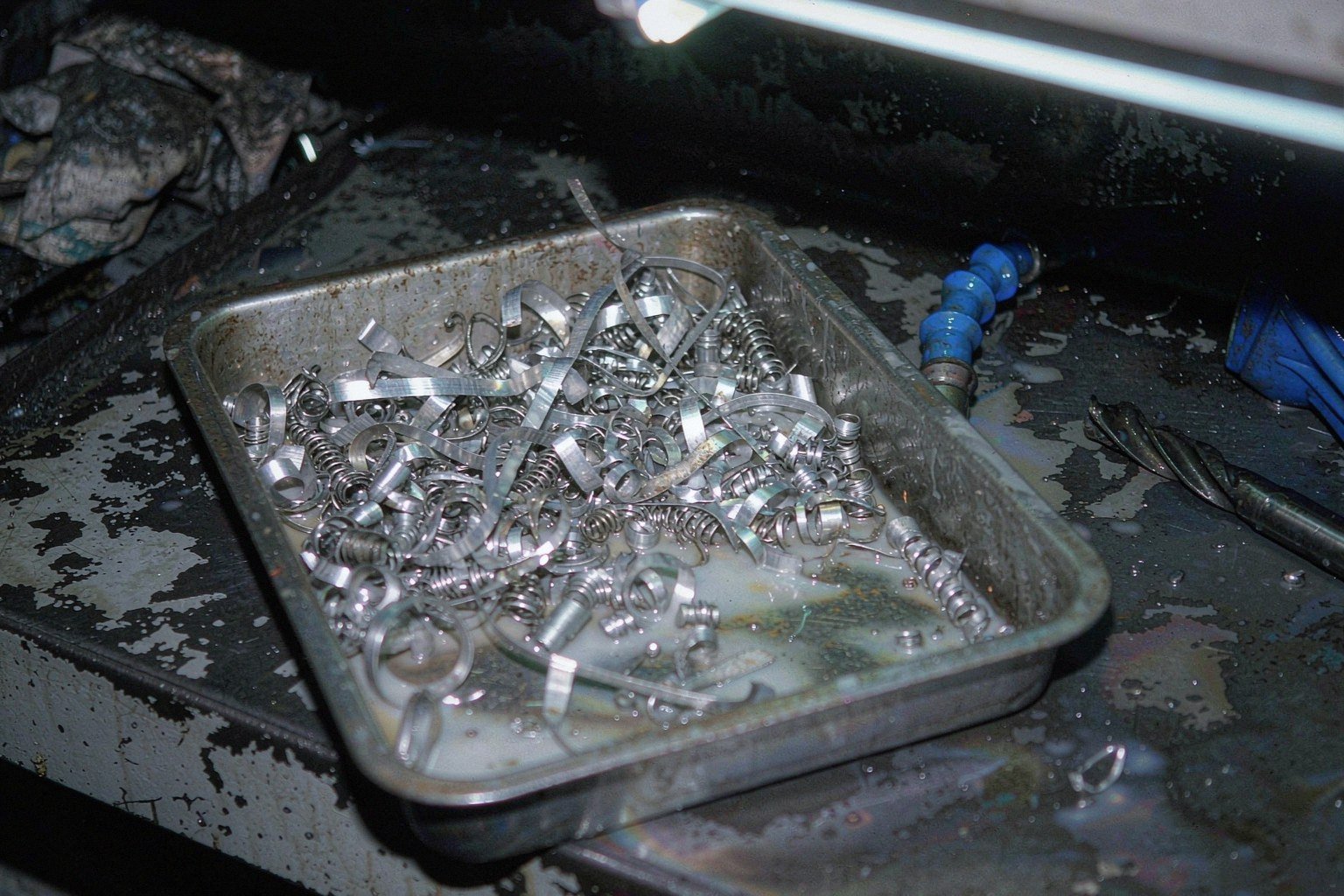
A steel chip tray full of short curled aluminium swarf from CNC machining, wet with milky white cutting fluid emulsion, bright freshly cut facets and a used carbide end mill lying beside the chips

Three rules decide whether aluminum comes off the machine looking like a part or like a mistake:

symptom
A dull edge rubs instead of cutting, aluminum welds to the tool, and the surface comes back torn and smeared.
what we change
Aluminum needs a razor-sharp, polished edge and a large positive rake — 20–25° with an edge radius of only 5–10 µm for insert tooling. A chip load below roughly 0.02 mm per tooth is rubbing, not cutting.
symptom
Someone runs a TiAlN-coated tool “because it lasts longer” and the finish gets worse.
what we change
Titanium-based coatings react with aluminum and build up on the edge. Use uncoated polished carbide or DLC / PCD. On long production runs of 7075, PCD delivers 20–50 times the tool life of standard carbide and pays for itself in days.
symptom
Chips pack into a deep pocket, get re-cut, and the wall thickness drifts out of tolerance.
what we change
Chip evacuation is a fixturing problem before it is a cutting problem. Through-spindle coolant or high-pressure air, a three-flute cutter with a wide gullet for profiling, and a program that does not send the tool back through its own swarf.
Turning
Rough Vc
Finish Vc
Feed fn
6061-T6
250–400
400–600
0.05–0.35
6082-T6
240–380
380–560
0.05–0.32
7075-T6
200–320
350–500
0.05–0.30
7075 + PCD
600–1000
800–1200
0.08–0.20
Milling
Rough Vc
Feed fz
Radial ae
6061-T6
300–900
0.05–0.25
5–25% D
6082-T6
300–800
0.05–0.22
5–25% D
7075-T6
250–700
0.04–0.18
5–20% D

All speeds in m/min, feed in mm per revolution or mm per tooth, on uncoated polished carbide with high-pressure coolant. Treat these as shop-floor starting points and tune them to your spindle, your tool length and your fixturing — a long, thin cutter in a soft setup cannot take the same parameters as a short one in a solid vice.

WHY ALUMINUM PARTS MOVE AFTER MACHINING

Lightweight is not an advantage if the part has to be scrapped at final inspection

01
Thermal
Aluminum expands about twice as much as steel
Coefficient of thermal expansion for 6061 is roughly 23.6 × 10⁻⁶ /°C against about 11–12 for steel. A 300 mm aluminum part grows around 0.071 mm between 20 °C and 30 °C. A measurement taken on a warm part in a warm room is not a wrong part.
Practical answer: inspect aluminum in a temperature-controlled room, at 20 °C, after the part has soaked. Where that is not possible, put the tolerance and the temperature on the drawing together, and we will state the temperature our CMM reported at.
02
Residual stress
The material was already loaded before you started
Quenching from solution treatment locks residual stress into the plate. Every cubic millimeter you remove redistributes it. Knock the skin off one face of a 7075-T6 plate and the part bows toward the machined side — the number one aluminum problem in every shop, not just ours.
Practical answer: buy T651 or T7351 for any plate job; rough symmetrically and leave 0.5–1 mm for finishing; on thin walls, program balanced cuts and accept that a roughing pause is cheaper than a scrapped part.
03
Weld and anodize
Two processes that quietly change the base material
Welding in T6 drops the heat-affected zone to about half strength, and there is no way to restore it without a full solution treatment and re-age. Anodizing adds a ceramic layer that is 5–10 times less thermally conductive than the metal under it — negligible across the surface, fatal across a thermal interface.
Practical answer: design welded joints for T4 strength, or move to 5083 / 6082. Mask thermal contact faces before anodizing, or use a conversion coating there instead — see the finishing section below.
FINISHING CHOICES THAT CHANGE THE THERMAL PATH

Anodizing a whole heat sink is fine. Anodizing the contact face is an engineering error.

Aluminum oxide conducts heat at 15–30 W/m·K, roughly one tenth of the aluminum beneath it, which sounds disqualifying and is not. The layer is only microns thick. A 25 µm Type II coating on 6061-T6 adds about 1.25 × 10⁻⁶ m²·K/W of thermal resistance — under 0.1% of a typical heat sink assembly, and it raises surface emissivity from about 0.05 to 0.85–0.9, which improves radiation cooling far more than the film costs. The problem is location, not thickness.
Type II anodize
5–25 µm
15–30 W/m·K
Decorative and protective sulfuric anodizing. Dyeable, 20 µm gives roughly 1,000 h of salt spray on 6061, and it is thick enough to change a tight fit — a 20 µm film adds 40 µm to a diameter. Nominal it on the drawing for anything with a press or slip fit.
Type III hard anodize
25–115 µm
15–30 W/m·K
Hard, wear-resistant, and about twice the thickness, so it swallows twice the dimensional allowance. The right choice for sliding and wear faces and for outdoor parts that get handled. Still negligible thermally across fins, still wrong across a contact interface.
Conversion coating
0.1–1 µm
50–100 W/m·K
Chemical film — Alodine or chromate per MIL-DTL-5541. Electrically conductive when specified, 20–200 times thinner than anodizing, and cheap enough to use as the default corrosion protection on a machined housing that also has to pass heat.
Masked anodize
selective
n/a
The correct answer for a heat sink: anodize the fins for emissivity and protection, mask the component seating face so it stays bare aluminum. The risk is edge seepage under the mask, so masking, anodizing and inspection have to happen in one controlled loop.
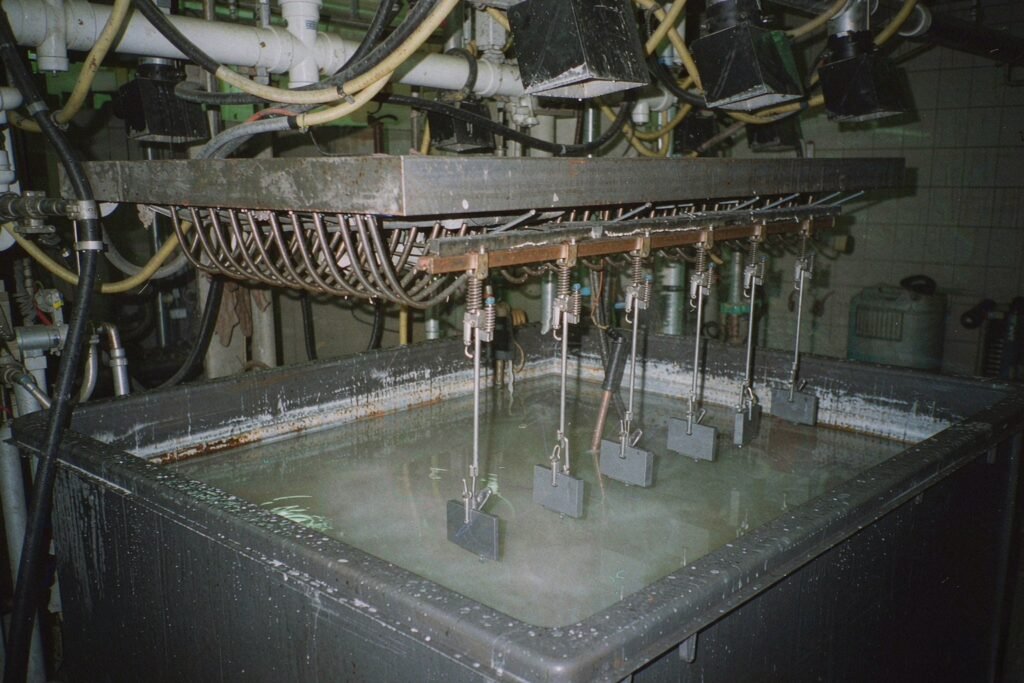
Machined aluminium parts held on spring-loaded titanium fingers above a sulphuric acid anodising tank, copper busbar along the rim and the still surface of the electrolyte below in a surface treatment workshop
Grade
Thermal conductivity
Relative to 6063
Consequence for a heat sink
6063-T5
200–209 W/m·K
reference
The extrusion alloy. Best thermal performance and the reason extruded fins beat machined fins on cost above roughly 10,000 units.
6061-T6
167 W/m·K
−20%
The structural compromise. Nearly double the yield strength of 6063, so it is the right base when the sink is also a mounting structure.
5052-H32
138 W/m·K
−34%
Formed covers and panels. Not a thermal-first grade, but excellent corrosion resistance when the housing is the enclosure.
7075-T6
130 W/m·K
−38%
The wrong answer. Two to three times the material cost and a third less cooling. Switching a 7075 callout to 6061-T6 raises conductivity about 28% and cuts the bar price.

One caveat worth printing: ASTM B209 and B221 do not specify thermal conductivity at all. They specify chemistry, temper and mechanical properties. Any conductivity number you see is a handbook or test value, typically 165–180 W/m·K for 6061-T6 at 25 °C, and it moves with temper. Do not put it on a purchase order as an acceptance criterion — put the temper there instead, because that is what a certificate can actually verify.

WHERE THESE GRADES ACTUALLY GO

Automation components, Structural parts and Electronic housings each break a different rule

The grade that suits one of these three is often the wrong grade for the next, and the constraint that decides it is rarely the one printed on the purchase order. These are the three questions we end up asking.
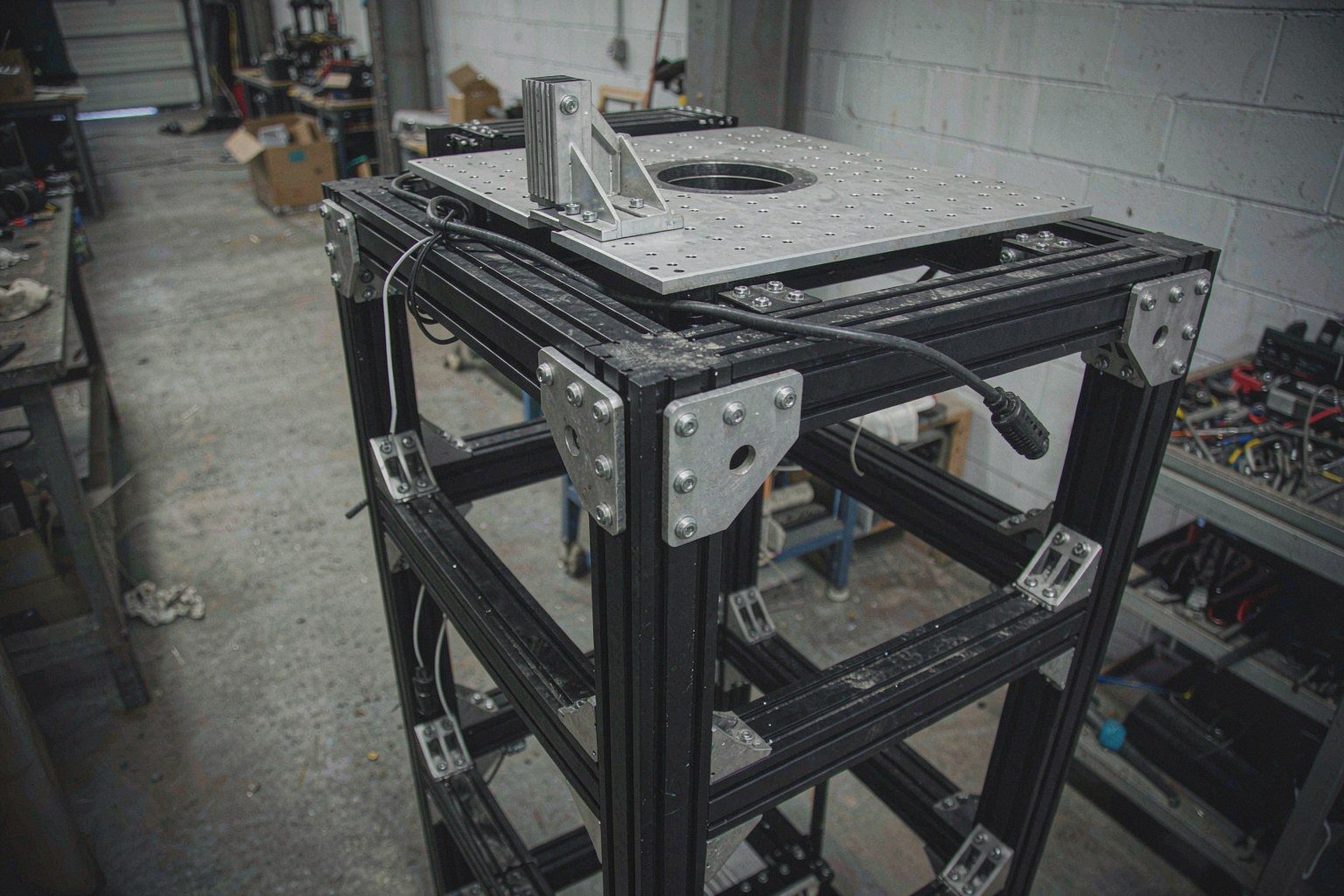
A black-anodized aluminum T-slot automation frame with cast corner brackets, carrying a machined aluminum mounting plate with a central motor bore, a ring of clearance holes and a ribbed L-bracket with triangular gussets
Automation components
The rule that breaks: stiffness is the spec, not strength
Pick-and-place gantries, end-effector plates, machine frames. These are almost always deflection-limited: the tool tip has to stay within a tenth of a millimeter under a load that would not trouble a much weaker material. Because all three grades share the same modulus, the answer is deeper ribs, closed box sections and a bigger second moment of area — not a more expensive alloy. 6061-T6 is almost always correct, usually with a black hard anodize for wear.
Typical grade6061-T6
Why not 7075same stiffness, 3× cost
FinishType III black
A large milled aluminum structural panel with a grid of lightening pockets between straight ribs, countersunk bolt holes along two edges and a face-milled scallop pattern across the surface
Structural parts
The rule that breaks: the weld is weaker than the table
Chassis, brackets, load-bearing frames. The published T6 values describe the parent metal; a welded joint nearby is running at roughly T4 strength, and the certificate will never show it. If the joint is in the load path, either design to that reduced figure, add a post-weld solution treatment and re-age, or move the whole assembly to a 5xxx alloy. In thick section, 6082 in T651 keeps more of its strength than 6061 and is what European codes expect.
Typical grade6082-T6/T651
HAZ design value~T4, ~50%
StandardsEN 485-2 / EN 755-2
A CNC milled aluminum electronics enclosure housing open face toward the camera, milled internal pocket with round corner radii, a row of tapped holes along the flange, a connector cut-out in the side wall and a matte grey anodized finish
Electronic housings
The rule that breaks: the finish is part of the thermal design
Sealed enclosures for drives, controllers, sensors and portable instruments. Three requirements fight each other: dissipate heat, seal to an IP rating, and shield EMI. Aluminum does all three — a conductive body is already a Faraday cage, and sealing only needs a gasket-ready flange and a milled flatness you can hold. What ruins it is anodizing the connector faces that have to ground, or specifying 7075 for a housing whose only real job is to conduct heat away.
Typical grade6061-T6
SealingIP54–IP67
Shielding>60 dB, sealed seams
2026 PRICES · WHERE THE MONEY GOES

Lightweight is a specification. High strength-to-weight ratio is a bill.

LME aluminum closed August 2026 at roughly $3,280 per tonne, up about 29% year on year, after touching $3,651 in May — the highest since 2022. China’s 45-million-tonne capacity cap is now fully utilized at around 45 Mt of a 73.8 Mt global total, so the supplier that absorbed every previous demand increase has no room left. US Midwest premiums sit at $485–620 per tonne on top under Section 232, and the EU CBAM took effect in January 2026. Every layer below is a negotiation, not a given.

LME / SHFE base
Global supply and demand
The commodity price every quote is indexed to, and the only layer you cannot argue with.
60%
Regional premium
Tariffs, freight, duty
Midwest US $485–620/t under Section 232; Europe $180–250/t with CBAM; China $120–280/t ex-works; Japan port premium settled at $395/t for Q3 2026, an eleven-year high.
14%
Alloy + conversion
Mill rolling, extrusion, drawing
Where 7075 separates itself. Aerospace 7xxx and 2xxx plate runs 2–3 × the price of commodity 6xxx because of tighter chemistry control, ultrasonic testing and lower rolling yields.
21%
Heat treat + finish
Temper, anodizing, coating
Small in percentage, large in risk. T651 over T6 costs 5–10% and prevents the rework that costs 100%.
5%
the lever nobody uses
Recycled content is now a price argument, not just an ESG slide
Secondary aluminum takes about 95% less energy than primary smelting, and one tonne of recycled metal avoids roughly ten tonnes of CO₂. With CBAM live, European customers are asking for 40–60% recycled content on the certificate, and mills are pricing it as a feature. If your end customer is in the EU, ask us for the recycled-content declaration with the mill certificate — it is becoming as important as the mechanical properties.
PROOF, NOT PROMISES

Certificates and incoming verification for aluminum stock

Aluminum has one substitution problem that outranks all others: a bar of 6061-T6 and a bar of 6061-T4 look identical from the outside and behave nothing alike. The temper is what you are buying, and the only way to know you got it is the paperwork plus a hardness check. XS Precision issues both as standard.

EN 10204 2.1
Mill declaration of compliance without test results. Fine for a bracket, useless for a load case.
EN 10204 3.1
Inspection certificate with the specific heat’s chemical and mechanical results, signed by the mill’s independent inspector. This is the default we quote.
ASTM B209 / B221
The product standards for plate and for extruded bar, rod and profile respectively. They specify chemistry, temper and mechanicals — not conductivity.
EN 573-3 / EN 755-2
The European chemistry and extruded-mechanical standards. A PO written around EN 755-2 is only satisfied by an EN 755-2 certificate.
AMS 2770 / 2772
Aerospace heat-treat specifications. Called out when the customer’s own drawing or end user requires aerospace traceability.
Hardness spot check
Brinell or Webster on every incoming lot. 7075-T6 should land near 150 HB and 6061-T6 near 95 HB; a T4 bar reads far lower and gets rejected.

The substitution you should test for. A T6-temper bar sold as T4, or a 6061 bar sold as 6082, will pass a visual inspection and dimension check every time. The two checks that catch it are a hardness test on the incoming lot and a mill certificate at 3.1 level. XS Precision runs a hardness check on every aluminum delivery, and where the customer’s end use is safety-related we will send the cut-off to a third-party laboratory for full spectrographic confirmation against the heat number before the job is released.
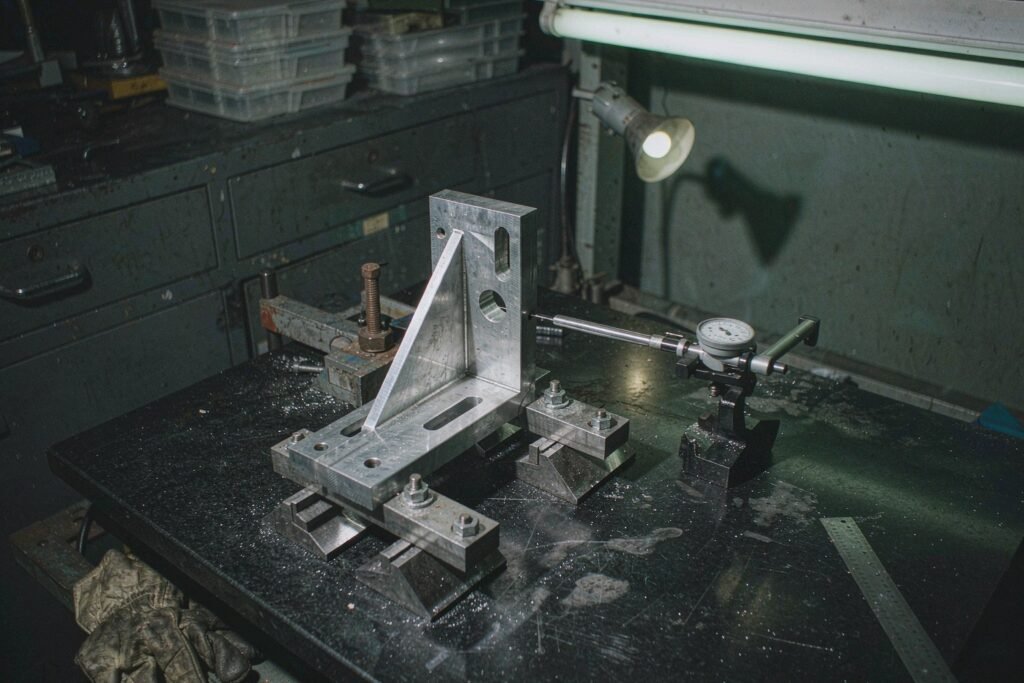
A machined aluminium L-bracket with triangular gussets and bolt slots clamped on V-blocks on a granite surface plate, a dial test indicator touching the vertical face and a steel rule lying flat beside it
THREE WAYS AN ALUMINUM SPECIFICATION QUIETLY GOES WRONG

All three of these reach the machine shop before anyone notices

01
Missing temper
“6061” is not a material specification
6061-O, 6061-T4, 6061-T6 and 6061-T651 are the same chemistry and four different materials. T6 roughly doubles the yield strength of T4. A drawing that says only “6061” gives every supplier on the quotation list a free choice, and the cheapest one will choose the softest temper that meets the drawing.
Write it as: “6061-T651 per ASTM B209” or “6082-T6 per EN 755-2”. Then the certificate can be checked against something.
02
Wrong standard
ASTM equivalence is metallurgical, not contractual
6061 and 6082 are genuinely different alloys, and neither has a true ASTM twin. If your end customer’s build authority is European you want EN 573-3 and EN 755-2 or EN 485-2 paperwork even if the metal is fine. A purchase order written around EN 755-2 is not satisfied by an ASTM B221 certificate, however good the metal is.
Write it as: name the form and the standard together — ASTM B209 for plate, ASTM B221 for extruded bar and profile, EN 485-2 for European sheet, EN 755-2 for European extrusion.
03
Wrong grade for the job
7075 on a heat sink, or a welded 7075 frame
7075-T6 conducts about 130 W/m·K against 167 for 6061-T6, so specifying it on a thermal part pays three times the material price for a third less cooling. And 7075 is not a fusion-weldable alloy at all: hot cracking, a 40–50% loss of strength in the weld zone, and a residual stress-corrosion risk down the seam.
Write it as: 6061-T6 or 6063-T5 for anything thermal; 6061 or 6082 for anything welded; reserve 7075-T651 / T7351 for un-welded, strength-critical, dry or well-protected load paths.

All three are caught for free at quotation stage and cost money once the material is on the floor. XS Precision reviews every incoming aluminum drawing for temper, standard and grade fit before releasing a price — say the word and we will flag anything that looks wrong before you commit.

ALUMINUM QUESTIONS, ANSWERED BEFORE THE QUOTE

The six questions we field most often about Aluminum Alloys

These arrive on nearly every aluminum enquiry, usually in this order. The answers below are the ones we would give on the phone, including the ones that lose us the job. XS Precision machines all three grades in the same cell, so the comparison is from our own cycle times rather than a datasheet.

If your customer’s drawings are American, or you want the widest choice of stock sizes and tempers, 6061. If they are European, or the part is a structural member in thick section, 6082 — it carries 8–12% more strength there and resists coastal corrosion better because it has essentially no copper. For a simple bracket that never sees salt, the two are interchangeable in practice and you should buy whichever is cheaper in the size you need.

Often yes, and it is the most satisfying substitution on this page: 7075-T6 at 570 MPa tensile is approaching many structural steels at one third of the density. Two conditions. First, the design must actually be strength-limited — if it is deflection-limited, 7075 has the same modulus as 6061 and buys you nothing. Second, nothing may be welded, and the part must either be dry or specified in T73/T7351 for chloride service.

Because anodizing adds material. A Type II coating of 20 µm grows the surface by 20 µm on every face, so a shaft gets 40 µm larger in diameter and a bore gets 40 µm smaller. Type III hard anodize can be 115 µm. For anything with a fit, either machine to allow for the coating and state the allowance on the drawing, or mask the critical surfaces. We ask which fits are functional before we send parts to the anodizer.

Yes, and it is usually caused by the fastener rather than the aluminum. Aluminum is anodic to stainless steel and to most plated fasteners, so in a wet or salty environment the aluminum becomes the sacrificial anode around every screw hole. Use zinc-plated or aluminum-compatible fasteners, apply a sealant or a nylon washer at the joint, and keep the anodized finish intact around the hole. Anodizing is an electrical insulator, which helps here — and hurts when you needed the joint to be conductive for grounding.

For a wall over 2 mm on a part we can support properly, ±0.02 mm on a linear dimension and ±0.05 mm on flatness is routine. Below 1 mm the material starts behaving like a spring: cutting force deflects it away from the cutter, the tool rubs, heat builds, and the wall moves again when the clamps come off. If a thin wall is unavoidable we reduce radial engagement, use a high-helix cutter, add sacrificial supports and accept a longer cycle time.

A STEP file; the alloy, temper and product standard written together — for example “6061-T651 per ASTM B209”; the surface finish and whether it is functional or cosmetic; which fits are critical and whether any of them will be anodized; and the quantity with its repeat pattern. The temper and the finish are the two answers that change a quote most, and they are the two most often left off the drawing.

Send the drawing. We will tell you whether the alloy and the temper match the job.

Tell us the alloy and temper as your customer wrote them, what the part has to do, whether anything is welded, whether anything is anodized, and how much mass actually matters. If 6061-T6 is enough we will say so even when the drawing asks for 7075 — and if the drawing asks for 7075 in a temper that will crack in service, we will say that too.

Request a quote today!