
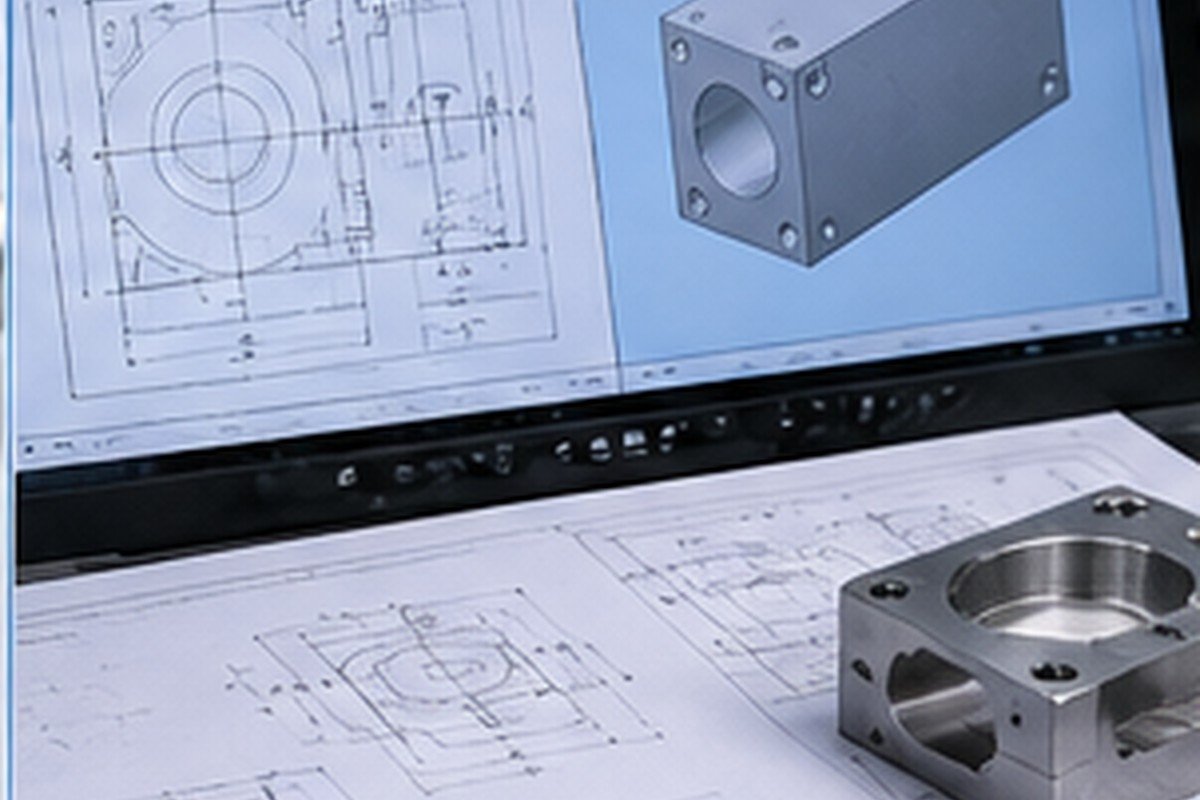
A CNC quotation is only as reliable as the files behind it. Conflicting drawings and models are more common than most buyers expect.
Two files can describe two different parts
A 3D model may show a gear while a PDF drawing refers to a rack, or a revision may change a hole pattern without changing the email subject. This is a document-control issue, not just a CAD issue. Quoting without clarification creates commercial and manufacturing risk.
A five-point pre-quote comparison
Check part number, revision, overall dimensions, distinctive geometry and quantity. Then review material, heat treatment, finish and critical tolerances on the drawing. The 3D model helps with geometry; the drawing often contains requirements not encoded in the model.
Which document takes precedence?
There is no safe universal assumption. Some buyers designate the 2D drawing as controlling; others make a model-based definition the authority. If the RFQ does not say, ask the buyer to confirm rather than guessing.
When a mismatch changes price
A corrected model can change stock size, operations, tooling, weight and shipping. Quote revisions should identify what changed and request written confirmation before production. Keep the RFQ revision history with the order.
A simple buyer checklist
Send one folder per part, match file names to the RFQ line items and include a revision index. Flag critical dimensions and tell the supplier if the 3D model is for reference only. Small administrative steps prevent expensive physical mistakes.
Additional manufacturing considerations
An RFQ list identifies a gear. The STEP file shows a gear. But the attached PDF describes a rack. Which one should the machine shop quote? Guessing can produce an apparently competitive price for the wrong component, followed by a purchase-order dispute and lost production time.
Before costing, match part number, revision, description, units and quantity across the RFQ list, 2D drawing and 3D model. Check overall dimensions and the features most likely to drive machining time. Do not assume that a matching filename means the geometry is correct.
A 3D model is valuable for geometry and CAM preparation. A 2D drawing commonly contains tolerances, threads, surface finish, material, heat treatment and inspection notes that may not exist in the model. The contractual precedence between files should be defined by the customer. If it is not, request clarification rather than creating your own rule.
Put the approved part number and revision on the quotation. Record any exclusions or assumptions, especially if a model is incomplete. When a customer changes geometry after the quotation, review material, cycle time, tooling, inspection and shipping weight before confirming the existing price.
Verify part number; drawing revision; model revision; units; material; finish; critical tolerances; thread details; quantities; and any differences between documents. Send one concise clarification table instead of a long email chain. It helps both engineering and purchasing reach a decision quickly.
Ask the supplier to identify the drawing revision being quoted, any assumptions that affect cost, and the inspection evidence that will accompany the parts. Where a feature is critical to assembly, agree on a measurable acceptance method before production begins.
If you are sourcing custom CNC machined components, send XS Precision your 2D drawing, 3D model, material specification, quantity and required inspection documents. We can review the manufacturing scope and clarify open technical questions before preparing a quotation.
Questions to resolve before placing an order
- Which dimensions or functional interfaces are critical for this CNC machining RFQ project?
- What material, finish and inspection evidence should be included with each shipment?
- Which drawing revision, quantity and delivery assumptions should the supplier use?
Discuss your part with XS Precision
If you are sourcing custom CNC machined components, send XS Precision your 2D drawing, STEP model, material specification, quantity and inspection requirements. We can review the manufacturing requirements and prepare a quotation based on the information provided.
Website: https://xsprecisiontech.com/